


Rose Colored Couch Blog

If you were born and raised in America and your parents came here from another country, there's a good chance you know a very specific kind of guilt. It shows up when you make a decision for yourself and do what's best for you, and you can feel, sometimes without anyone saying a word, that it's not what your parents wanted. Before I go any further, I want to be very clear about something. This is not criticizing immigrant parents, and it's not shaming anyone. I just want to name what comes up and help you understand it better. You can have great parents, like objectively great parents, have a good relationship with them, look up to them, and still experience this. It doesn't have to be all bad. It also won't look exactly the same across every culture. Middle Eastern, South Asian, East Asian, African, European and Latino families are all different, but the themes I see come up are very similar. Where this guilt comes from Your parents most likely gave up a lot to come here. Maybe they came as children or adolescents, or maybe they came as adults. Either way, they likely left behind a harder life to create a better one for themselves and their future children. If they came here as adults, that means they spent their entire childhood and adolescence in a different country, being raised by parents likely from that country, which was likely different in some ways from how American-born parents were raised. Those experiences matter. Your parents developed beliefs about themselves and about the world based on the experiences they had, and that's going to affect how they parent, even subtly. If they live in a community surrounded by other people from their country, or came here with their whole family, those expectations can be even stronger. Sometimes it sounds like this: you have to be married by a certain age, you have to marry this type of person, you have to have this type of job and make X amount of money, you have to carry yourself in a certain way. If you don't, you're a disappointment, or you're bringing down your family. Your parents don't even have to say it directly. Sometimes you can just feel it. You can develop a belief from those interactions and the messages you've been sent over the years, and it goes something like this: they sacrificed so much, so I need to do this in return. I need to pay them back by living the life they want for me. On top of that, you're often navigating two cultures at once, the one at home and the one everywhere else, and it can feel like you don't fully belong in either. That can make every choice you make for yourself feel even heavier. My own experience My dad is from Egypt, and he came here by himself when he was 25. He came because he wanted a different life for himself, and he left behind his whole family and the country he grew up in. He has always been open-minded and approached parenting differently than other immigrant parents might have. He instilled certain values in me, but never forced or pressured me to do anything I didn't want to do, and I will forever be grateful to him for that. Still, a lot of the values he was raised with came with him, like working hard and doing the best you can in school (there were definitely expectations for school). When I was 13, my parents bought me a horse, but I had to work to help pay for the expenses. I started cleaning stalls at the barn on the weekends to help pay for my horse's board, and I kept doing that all throughout high school, along with working another job. My parents gave me so much, but they also instilled a strong work ethic in me that has carried me into growing two businesses of my own. Choosing their life isn't how you repay them One of my favorite quotes is from Eleanor Roosevelt: "No one can make you feel inferior without your consent." I think that applies to any feeling, including guilt. No one can make you feel guilty unless you allow it. You have to live your own life. If you end up choosing the life your parents wanted for you and you're not happy, you will eventually build up resentment toward them, and that's not going to benefit anyone. You can honor and respect your parents for everything they did for you and for all of their sacrifices, while also doing what's best for you. There are so many ways to show that love, respect and appreciation. Choosing the life they want for you is not the way to repay them. Choosing a life that lights you up, the same way they chose a different life for themselves... that's how you honor it. Part of that is figuring out your own values, which is something everyone has to do, whether or not you have immigrant parents. It starts in adolescence and early adulthood and continues well into your 20s and 30s, and even beyond. What do I value? What is important to me? A lot of your values will probably be the same as your family's, but not all of them, and that's okay. It's important to figure that out separately from your parents, so you know what path you're meant for and your choices come from what matters to you rather than from obligation. When choosing yourself feels uncomfortable Choosing your own life involves a number of decisions, including how you want to dress, where you want to live, what career you want, the friends and relationships you have, or the hobbies you enjoy. It can feel really uncomfortable when you start making your own decisions and your parents aren't happy, or they seem disappointed. You can be a full-fledged adult, living at home or on your own, and still feel that disappointment. It might also feel scary, and it might even feel like you're betraying them, or that they'll be angry and never forgive you. It's okay if it feels uncomfortable. That doesn't mean you're doing anything wrong, and it doesn't mean you should stop. If you want to keep a close relationship with your parents and choosing your own life feels like it would put that at risk, I gently encourage you to ask yourself: What would sacrificing your own happiness actually do to your relationship with your parents? Would that benefit you or them? What is holding you back from choosing your life? You were never obligated to sacrifice your own happiness to please your parents. I don't think your parents would truly want that either. You don't have to figure this out alone If this is something you're struggling with, please reach out to a professional so you have space to talk it through. Untangling guilt, family expectations and who you actually want to be is a lot to carry on your own. If you're ready to start figuring out who you are and creating a life that feels like yours, that's exactly what my 3-month one to one coaching program, Becoming Her, was created for. Learn more about Becoming Her here. Your life is yours, and it's meant to be lived in a way that is fulfilling for you. The Rose Colored Couch is here to inspire, encourage reflection, and educate, but these posts aren't a substitute for therapy. My hope is to help you shift how you see yourself and your story. Take what resonates, leave what doesn't, and be gentle with yourself along the way.

Why I Really Wanted to Go
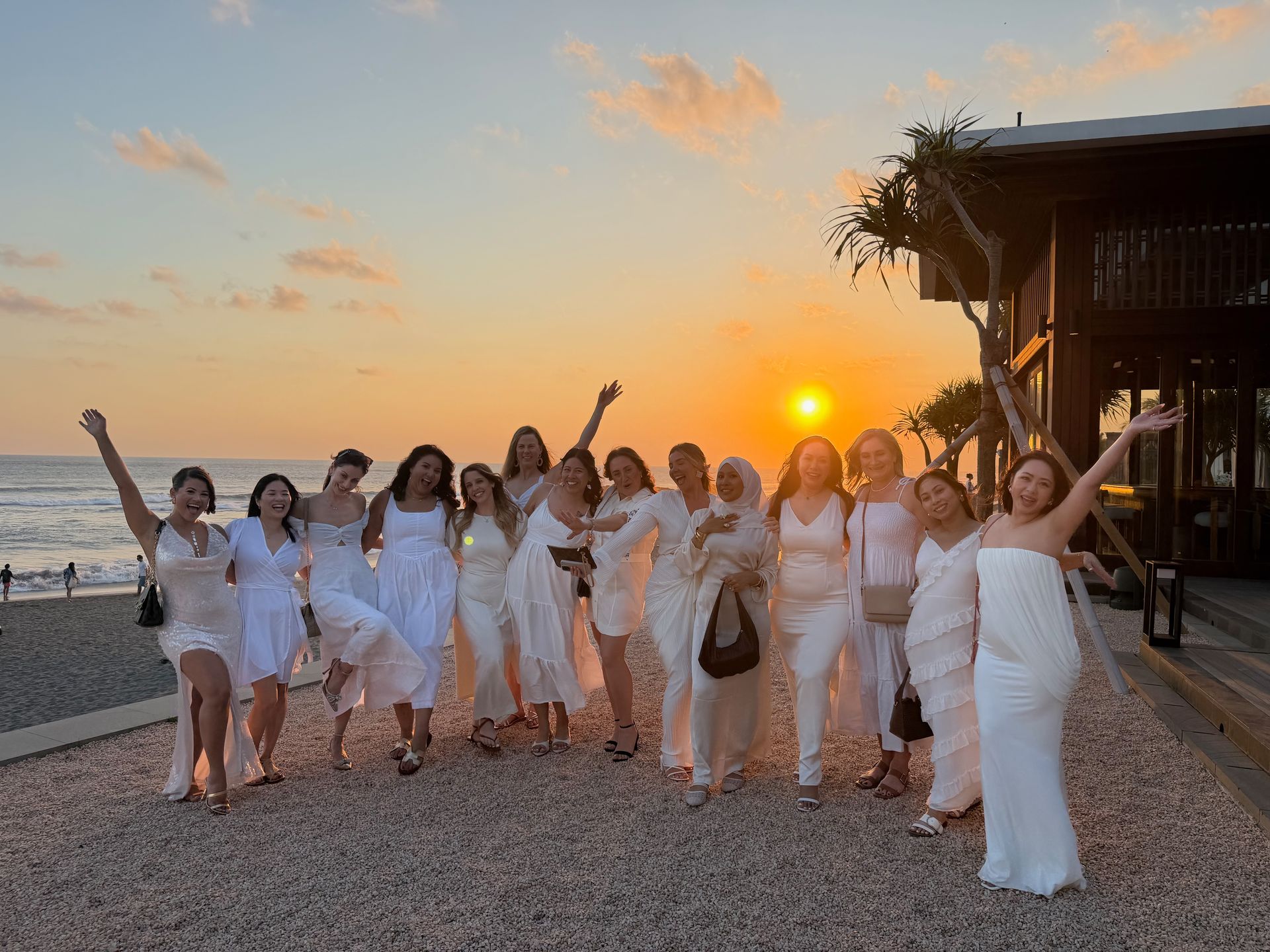
What a business retreat in Bali taught me about releasing control, and why it might be exactly what helps you expand and get what you want.

Where our beliefs come from, and why they quietly shape everything we see.

Burned out and can’t slow down? Rest isn’t laziness. There’s a belief underneath it. Here’s why rest feels like falling behind, and how it changes.

If you were born and raised in America and your parents came here from another country, there's a good chance you know a very specific kind of guilt. It shows up when you make a decision for yourself and do what's best for you, and you can feel, sometimes without anyone saying a word, that it's not what your parents wanted. Before I go any further, I want to be very clear about something. This is not criticizing immigrant parents, and it's not shaming anyone. I just want to name what comes up and help you understand it better. You can have great parents, like objectively great parents, have a good relationship with them, look up to them, and still experience this. It doesn't have to be all bad. It also won't look exactly the same across every culture. Middle Eastern, South Asian, East Asian, African, European and Latino families are all different, but the themes I see come up are very similar. Where this guilt comes from Your parents most likely gave up a lot to come here. Maybe they came as children or adolescents, or maybe they came as adults. Either way, they likely left behind a harder life to create a better one for themselves and their future children. If they came here as adults, that means they spent their entire childhood and adolescence in a different country, being raised by parents likely from that country, which was likely different in some ways from how American-born parents were raised. Those experiences matter. Your parents developed beliefs about themselves and about the world based on the experiences they had, and that's going to affect how they parent, even subtly. If they live in a community surrounded by other people from their country, or came here with their whole family, those expectations can be even stronger. Sometimes it sounds like this: you have to be married by a certain age, you have to marry this type of person, you have to have this type of job and make X amount of money, you have to carry yourself in a certain way. If you don't, you're a disappointment, or you're bringing down your family. Your parents don't even have to say it directly. Sometimes you can just feel it. You can develop a belief from those interactions and the messages you've been sent over the years, and it goes something like this: they sacrificed so much, so I need to do this in return. I need to pay them back by living the life they want for me. On top of that, you're often navigating two cultures at once, the one at home and the one everywhere else, and it can feel like you don't fully belong in either. That can make every choice you make for yourself feel even heavier. My own experience My dad is from Egypt, and he came here by himself when he was 25. He came because he wanted a different life for himself, and he left behind his whole family and the country he grew up in. He has always been open-minded and approached parenting differently than other immigrant parents might have. He instilled certain values in me, but never forced or pressured me to do anything I didn't want to do, and I will forever be grateful to him for that. Still, a lot of the values he was raised with came with him, like working hard and doing the best you can in school (there were definitely expectations for school). When I was 13, my parents bought me a horse, but I had to work to help pay for the expenses. I started cleaning stalls at the barn on the weekends to help pay for my horse's board, and I kept doing that all throughout high school, along with working another job. My parents gave me so much, but they also instilled a strong work ethic in me that has carried me into growing two businesses of my own. Choosing their life isn't how you repay them One of my favorite quotes is from Eleanor Roosevelt: "No one can make you feel inferior without your consent." I think that applies to any feeling, including guilt. No one can make you feel guilty unless you allow it. You have to live your own life. If you end up choosing the life your parents wanted for you and you're not happy, you will eventually build up resentment toward them, and that's not going to benefit anyone. You can honor and respect your parents for everything they did for you and for all of their sacrifices, while also doing what's best for you. There are so many ways to show that love, respect and appreciation. Choosing the life they want for you is not the way to repay them. Choosing a life that lights you up, the same way they chose a different life for themselves... that's how you honor it. Part of that is figuring out your own values, which is something everyone has to do, whether or not you have immigrant parents. It starts in adolescence and early adulthood and continues well into your 20s and 30s, and even beyond. What do I value? What is important to me? A lot of your values will probably be the same as your family's, but not all of them, and that's okay. It's important to figure that out separately from your parents, so you know what path you're meant for and your choices come from what matters to you rather than from obligation. When choosing yourself feels uncomfortable Choosing your own life involves a number of decisions, including how you want to dress, where you want to live, what career you want, the friends and relationships you have, or the hobbies you enjoy. It can feel really uncomfortable when you start making your own decisions and your parents aren't happy, or they seem disappointed. You can be a full-fledged adult, living at home or on your own, and still feel that disappointment. It might also feel scary, and it might even feel like you're betraying them, or that they'll be angry and never forgive you. It's okay if it feels uncomfortable. That doesn't mean you're doing anything wrong, and it doesn't mean you should stop. If you want to keep a close relationship with your parents and choosing your own life feels like it would put that at risk, I gently encourage you to ask yourself: What would sacrificing your own happiness actually do to your relationship with your parents? Would that benefit you or them? What is holding you back from choosing your life? You were never obligated to sacrifice your own happiness to please your parents. I don't think your parents would truly want that either. You don't have to figure this out alone If this is something you're struggling with, please reach out to a professional so you have space to talk it through. Untangling guilt, family expectations and who you actually want to be is a lot to carry on your own. If you're ready to start figuring out who you are and creating a life that feels like yours, that's exactly what my 3-month one to one coaching program, Becoming Her, was created for. Learn more about Becoming Her here. Your life is yours, and it's meant to be lived in a way that is fulfilling for you. The Rose Colored Couch is here to inspire, encourage reflection, and educate, but these posts aren't a substitute for therapy. My hope is to help you shift how you see yourself and your story. Take what resonates, leave what doesn't, and be gentle with yourself along the way.
Why I Really Wanted to Go
What a business retreat in Bali taught me about releasing control, and why it might be exactly what helps you expand and get what you want.
Where our beliefs come from, and why they quietly shape everything we see.
Burned out and can’t slow down? Rest isn’t laziness. There’s a belief underneath it. Here’s why rest feels like falling behind, and how it changes.

Struggling with family expectations in Virginia? Dr. Najwa provides specialized therapy for high-achievers dealing with family pressure. Find support today.

Struggling with self-doubt in Virginia? Dr. Najwa specializes in self-esteem therapy for successful women who seek constant permission. Find confidence today.

Struggling with perfectionism in Virginia? Dr. Najwa specializes in therapy for high-achieving women who feel never good enough. Find compassionate support today.

Struggling with high achiever anxiety in Virginia? Dr. Najwa guides perfectionist women who overthink and people-please to build a calmer, healthier life.

Struggling with high achiever anxiety in Virginia? Dr. Najwa helps perfectionist women break cycles of overthinking and people-pleasing to ease anxiety and thrive.